Hi there, I am very excited to finally share this with you, I was invited by Merrell Publishers to make a review with my impressions on their new book on the FAMM museum collection. The FAMM, Female Artists of Mougins Museum, was opened last year, and Mr Christian Levett, FAMM’s founder was kind enough to accept to answer some of my questions. And now I can share it with you!

The FAMM
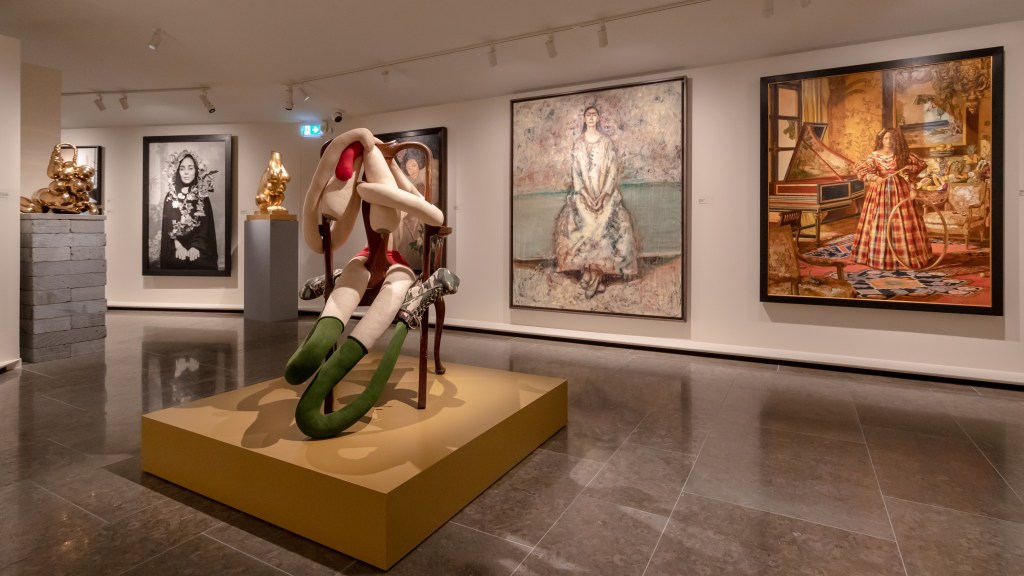
The FAMM, Female Artists of Mougins Museum, was opened in June 2024, a year ago, and it is the first private museum in Europe dedicated to female artists. The museum is the product of the vision of one man, Mr. Christian Levett. Its collection is impressive, from Impressionism to present day with over than 100 works 90 women from around the world. But the museum displays more than this, thanks to regular rotations which highlight new selections from the wider Levett Collection, an expanding array of over 500 artworks by women artists.
FAMM’s singular focus on displaying art made by women is more necessary and vital than ever for elevating the status of women artist and for increasing intersectional representation in the art world. It helps to bring gender parity to the art world while reshape the cannon of art. I had the pleasure to ask him some questions about the collection, the museum, etc.

Women’n Art: When was your first contact with art? And how did your interest in art arise?
Mr Christian Levett: My earliest collecting impulses go back to childhood. I started collecting military medals and coins as a child, and was always interested in history. That fascination with collecting gradually evolved into a passion for art. When I moved to Paris in for work 1995 aged 25, and living near the Louvre and Musée d’Orsay, I began spending my weekends in museums and self-teaching myself about art-history, and that exposure sparked my interest in acquiring artworks myself.
W’nA: What was your biggest influence in fostering your passion for art?
CL: Living in Paris was transformative. Although my family hadn’t been involved in the art world, being surrounded by the collections of the museums of Paris opened my eyes to the possibilities of collecting art too. Over time, this interest deepened from old masters to antiquities and eventually to modern and contemporary art.
W’nA: How did you become an art collector?
CL: I began by acquiring a few 17th-century paintings while living in Paris, and then Monaco. From there, the collection expanded, first into Impressionist drawings and later into Roman, Greek and Egyptian antiquities, ancient arms and armour, and then entirely modern works from around 2014. Initially, I bought things simply because I fell in love with them and enjoyed researching them, without any plan to establish a museum or a major collection. However, I was collecting far quicker than I could display at home and ended up with storage facilities full of art.
W’nA: When did you decide to open a museum?
CL: I had so much in storage, that in I decided in 2009 to create a museum to share my antiquities and classical art collection with the public. This led to the opening of the Musée d’Art Classique de Mougins (MACM) in 2011. However, as my collecting habits changed, and by 2018 I was collecting artworks exclusively by female artists, I closed it briefly for a transformation and in June 2024 I reopened it as FAMM—the Female Artists of the Mougins Museum—dedicated exclusively to women artists.
W’nA: Why Mougins? What takes you to this little village in the south of France? Has the local art scene influenced your collection?
CL: I have owned a home in Mougins since 2006. The area’s connection to artists like Picasso, Leger, Cocteau, Picabia, its rich cultural heritage, and its setting in the hills above Cannes made it an ideal location for a museum. While the local scene didn’t directly shape my collecting focus, Mougins has become a natural home for showcasing the collection and attracting international visitors.
W’nA: And why did you decide to sell the collection of this first museum at Christie’s?
CL: When I shifted my focus to collecting female artists exclusively, there seemed little point simply locking the prior collection away in storage indefinitely. So Christies expertly conducted five specialist Mougins Museum of Classical Art auctions, and there will be another three at Artcurial in Paris between November 2025 and November 2026.
W’nA: As a collector and an art lover, how would you explain the evolution of your art interests?
CL: I always had a deep interest in reading about ancient and medieval history and ancient battles as a child, and that came through in my early collecting of course. However, they are also difficult markets in recent years to find great pieces in, with good provenance and in a great state of preservation. However, I’d often bought modern art and interspersed it amongst the antiquities in my museum, and by 2014 I decided to keep things simpler and focus on it entirely, and then and finally to focusing on women artists only. Part of this was driven by curiosity and a desire to collect works of modern exceptional quality, and part by realizing how overlooked female artists had been historically and this made the research in this area incredibly exciting too. The more I explored, the more compelling it became to dedicate the entire collection to their work.
W’nA: I read that your interest in women artists began after reading a classic work of art history because you noticed the absence of women there. Would you say that was when the desire to collect works by women artists arose? Or did the interest in discovering the work of women artists arise and the desire to collect it come later?
CL: It was gradual. After three years of focusing on modern art, I quickly began to realise that you could buy the greatest artworks by women artists of the 20th century, in a way that just wasn’t possible when looking at their male equivalents of each period. Then I noticed the absence of women in major publications—like Irving Sandler’s The Triumph of American Painting, which didn’t feature a single painting by a female artist. And then the classic art history book, The Story Of Art, my EM Gombrich, was a similar situation until recent reprints. At first, I simply wanted to learn more about them, and then inevitably, this interest evolved into collecting their work and eventually focusing the entire museum on it.
W’nA: How did you decide to open FAMM?
CL: I’d opened my house in Florence to private tours of my female art collection housed there in 202, and the popularity of them exploded. I then helped curate a European tour of the women of abstract expressionism and published a book on the same subject in 2023. It then became clear to me that there was an opportunity to create something unique—a European museum of global significance dedicated exclusively to women artists. The mission is to help correct historical imbalances by giving these artists the visibility they deserve.
W’nA: What was the most surprising thing you learned while shifting to collecting female artists?
CL: The most striking realization was how accessible museum-quality works by women were compared to their male counterparts. In many cases, you could acquire the very best examples of their work for a fraction of the price of comparable male artists. That disparity was both an opportunity and a sign of how undervalued these artists have been.
W’nA: Which artist are you currently most excited about? Why?
CL: It’s difficult to single one out, but I am particularly drawn to the work of Joan Mitchell, Lee Krasner, and Helen Frankenthaler. Their paintings have a dynamism and originality that rival any of their male contemporaries. Joan Mitchell’s work ‘When they were gone’ painted in near Giverny in 1977, for example, is a highlight of the collection. Although I also love the impressionist and surrealist works I’ve acquired too.
W’nA: When you think about expanding the collection, what factors do you consider?
CL: The main considerations are artistic merit, historical significance, and provenance. I am especially interested in works that can enrich the museum narrative and highlight overlooked stories in art history.

W’nA: What’s the biggest misconception about collecting works made by women artists? What draws you to it?
CL: The misconception is that these works are somehow “secondary” to male artists, when in fact many are of equal or greater quality. What draws me to them is the chance to help rebalance perceptions, and to build a collection that offers a more complete picture of 20th-century and contemporary art.
W’nA: I observed that you collected de Kooning’s work in depth. Does this artist’s work touch you in particular?
CL: Yes—Elaine de Kooning’s work in particular resonates with me. Her paintings have tremendous energy, and she was one of the first female artists I collected in depth. Her vibrant life story and unusually-conducted marriage to Willem, also make her a particularly fascinating individual to research on both a social and professional basis.
W’nA: What are the must-see works of FAMM?
CL: Among many, highlights include two paintings by Berthe Morisot in the entrance, Dorothea Tanning’s largest ever painting, 3mx2m in the surrealist section, Frida Kahlo’s self-decorated cast for 1950 on the top floor, Tracey Emin’s blanket that belonged to George Michael in the basement, behind the large self-portrait pregnant by Jenny Saville, will all be must sees for the public. There’s a hundred works in the museum, all of which are A+ examples by each artist.
The book
It is an authoritative guide to FAMM and the wider Levett collection, written by a range of female curators, academics and art historians, presenting more than 200 works. It is divided in 6 themed sections representing an exciting artistic journey, the final two sections are devoted to sculpture and contemporary art. And it is BEAUTIFUL!
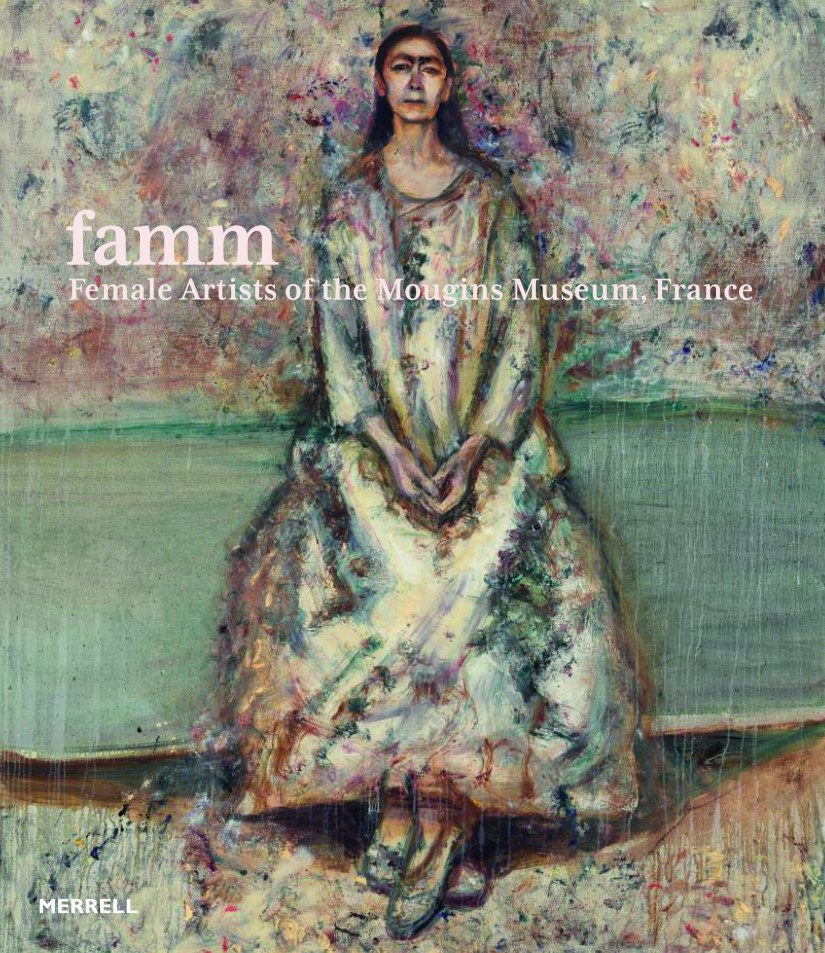
The first section of the book is like a trip from the Impressionism with Berthe Morisot to the Modern art, but it is not an artistic trip, it’s a trip through the lives, careers, and histories of the artists, showing us how discovering the ability to improvise, and to create alternatives had to do with their strategy but also with their style. In this section, as we get to know the works in the collection, we also learn about their social and cultural context, as well as the similarities and differences with the works created by male artists at the same period. Thus, introducing us not only to the works of art, or to the lives of these artists, but also and mainly to their reality.
The section about surrealist artists, probably my favourite section of book, presents us a very wide variety of works and artists. Surrealism was a movement that opposed the concept of segregation, and of course, for this reason it was the movement with the biggest number of women than any other group. Here, we get to know the signature works by Leonor Fini and Dora Maar connected to the disparate impulses during the postwar period.
Through the book, we can realise that the figuration is a guiding thread of the Levett Collection at FAMM, that links the artists who worked (and work) in very different styles across time, place, and media. Among the figuration works we can see a great number of portraits. A very important gender for women artists, since it offers them the opportunity to get involved in issues such as identity or visibility, and not only of the models, but also their owns. In this way we observe that it is used to explore new perspective and limits of expressive capacity.

Oil on canvas, 65.4 x 81.3 cm
CL1251
The FAMM and Levett Collection have a very impressive collection (more than 100!) by female abstract expressionist artists that were active in New York, San Francisco, and Paris from around the 40s to the mid-70s. Also, they have recently incorporated an essential assortment by contemporary artists that are working worldwide that can be considered as a “unique demonstration of female artistry” according to Ellen G. Landau, the author of this section. A remarkable aspect of Mr. Levett’s choice of women’s Abstract Expressionist art is his acquisition of a subset of drawings and oils dating to the earliest years of the movement. The collections demonstrates that there were a greater number of women than men in Abstract Expressionism who were open to a transatlantic dialogue. The female artists of Abstract Expressionism chose different paths that fully shaped their own originality.
In the section dedicated to the sculptures of the collection, it demonstrates how marked by a diversity of subjects is the 20th century and contemporary sculpture in Western art. Artists start to use an array of materials and methods to convey artistic meaning. As sculpture progressed, artists adopted an increasingly diverse number of materials, because the material is as important as the subject of the sculpture. The modern and contemporary sculptures ask viewers to think about the sculpture in reloan with themselves, for example about the variety of scale, since we can find them in ranges from the intimate to the monumental, contemporary and modern sculptors feel more experimental. One of the greatest names of this section is Helen Frankenthaler.
The last section, dedicated to contemporary art, is for me an immersion in “what it is to be a woman” or “what it is like to live in a female body”. Since much of the contemporary work of female artists discusses the female experience from a more physical, corporeal perspective, with all its challenges. Jennifer Samet, the author of the section describes “the body as a carrier of life, giving care and protection”. We can surely say that this section means a fundamental change in representation, because the bodies represented here are not the product of someone else’s gaze, they’re expression of selfhood. They represent the shifts of real experience with all its pains and pleasures, sorrows and happiness.
My rate
The book works like a bridge that connects three different lands, the reader, the collection, and the history of art. As in the Surrealism section, when the author explains the importance of the scholarships on Surrealism aligned to feminist activism that proved the women of the surrealist movement were the protagonists in the shaping of the history of art at that time; what is perfected aligned with Mr. Levett’s idea of exposing the work of female artists in space created for this purpose.

Oil on canvas, 236.22 x 198.12 cm
CL1084
© EdK Trust
I love how the book shows us the importance of places like FAMM. Because only when we see women’s artworks displayed in a way to tell a history, to tell the history of art, and not only as “the exception”, “the example”, or “the exotic” that it is possible to analyse it and give it its true value.
Through the book, it becomes clear that the FAMM and Levett collections allow us to tell the history of art that was previously hidden from us. This hidden side, or what in most cases was a mere detail, an exception, a curiosity; but thanks to this museum, we finally realize how incomplete our art history has been presented. Although the museum presents the history of art in a unilateral way, this unilateralism helps us understand that it is also possible to tell the history of art from this other side. Of course, we realize that there are gaps, and therefore it becomes more evident that we cannot continue to reduce the entire production of a generation of artists to the work of a single female artist.
Another great thing we found in the book is an illustrated timeline that highlights the most significant events in art history involving female artists. I find this very helpful, especially for those who don’t have much knowledge about female artists, and even for those who are familiar with the subject, it’s possible to find some little details they’d never heard of before.
So, after everything I’ve said, I highly recommend the book, and I give it a 10/10 rating.
Curiosities:
- One of the details that makes the Levett Collection special is that it features rare artists such as Jeanne Hébuterne, whose extent of the oeuvre is unknown.
- The Levett collection has the outstanding number of 30 self-portraits.
- FAMM is the second major museum to provide equitable representation on the vital output of women artists. The first one is the NMWA in Washington DC.
- Elaine de Kooning is very well represented in the Levett Collection, by 40 works and a handful of archival materials.
- The authors of the book are Samantha Baskind, Jennifer R. Cohen, Kristan M. Hanson, Ellen G. Landau, Debra N. Mancoff, Jennifer Samet, Yayoi Shionoiri.
References:

Discover more from Women'n Art
Subscribe to get the latest posts sent to your email.

 Women'n Art
An excellent interview! It’s striking to reflect on how, historically, many women had limited opportunities to pursue artistic or literary expression — not due to lack of talent or interest, but because prevailing social roles required them to prioritise domestic responsibilities and family life over cultivating their own creative voice. Worse still, those who did manage to create were often rendered invisible beside their male contemporaries or partners — Elaine de Kooning being just one example. It’s encouraging to see that changing, and to see men actively supporting initiatives like female-focused museums. Thank you for sharing!
LikeLiked by 1 person
Hi Sophie, thank you very much for commenting. I’m glad you like it! 😊
LikeLike