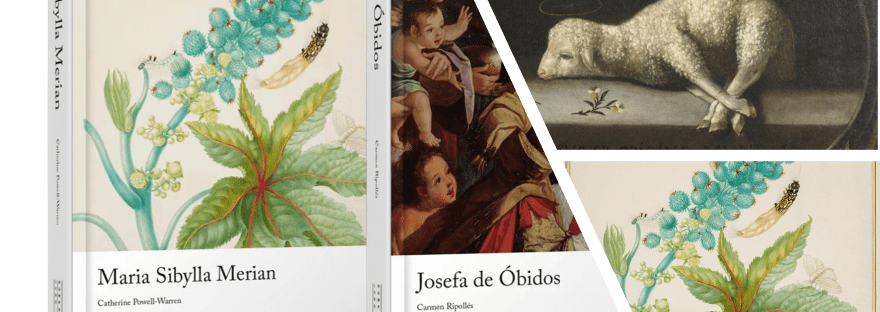
Hi there, I am so excited to share this with you, I was invited, again, by Lund Humphries to make a review with my impressions on other two titles of the beautiful book series Illuminating Women Artists, you know that I am a fan of this book series. The previous review was on the books about Eufrasia Burlamacchi and Clara Peeters. Now I invite all of you to read this new review on the books about Josefa de Óbidos and Maria SibyllaMerian.
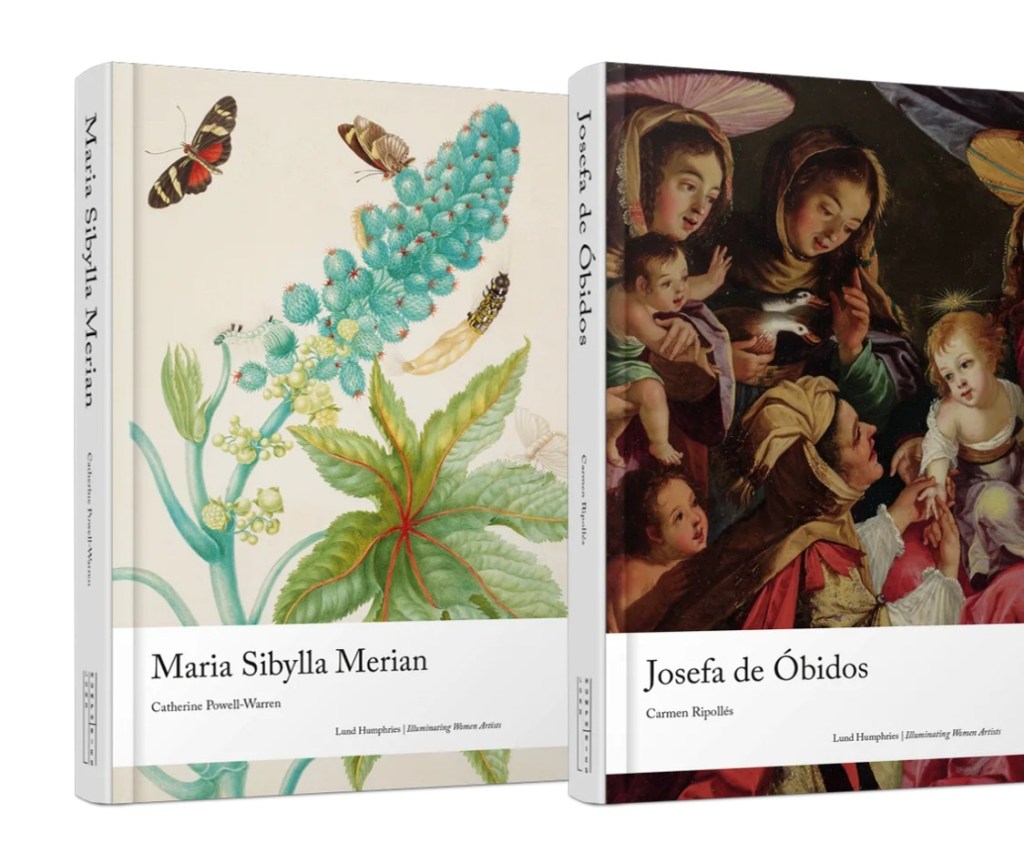
I must say that this time I already knew a bit about both artists and their works. So, none of them were a completely stranger to me. Now, without further ado, let’s get to the review.
Josefa de Óbidos
The first book I read this time was the one about Portuguese Baroque painter Josefa de Óbidos, it is written by Carmen Ripollés, who is an associated professor of art history at the Portland State University. Josefa de Ayala Cabreira, this was her real name, Óbidos is the name of the Portuguese village where she lived, and she is considered as the inventor of the Portuguese Baroque. She was important in her country, considered as a very original artist. To measure her importance, suffice it to say that no other woman artist has been credited with inventing/starting a style of a particular time or geographic area.
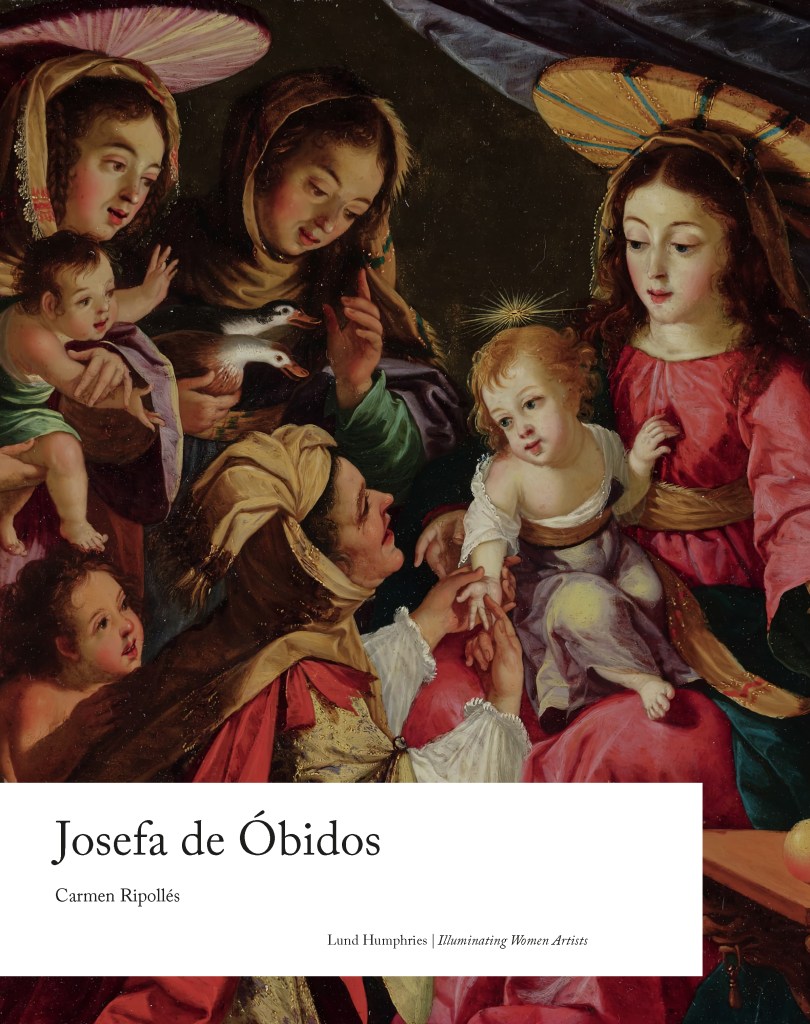
Josefa de Óbidos painted very beautiful and detailed still lifes, however she is famous for her religious paintings. Probably because she received throughout her career several important public commissions for altarpieces, and for paintings to be displayed in churches or monasteries, perhaps for this reason the myth arouse that she was a nun.
It is important to note here that she was a female artist, who was respected and admired in her time, her fame is not posthumous as many of us could imagine. In fact, she’s the most celebrated artist of the Baroque in Portugal. In this book Ripollés showed to us how the Josefa’s body of work, in a whole, has a great sense of cohesiveness and a style much more distinctive than that of most Portuguese artists of her time. Also, the author brings a new gendered perspective to Josefa’s artistic identity, since she was rarely examined from a gender perspective.
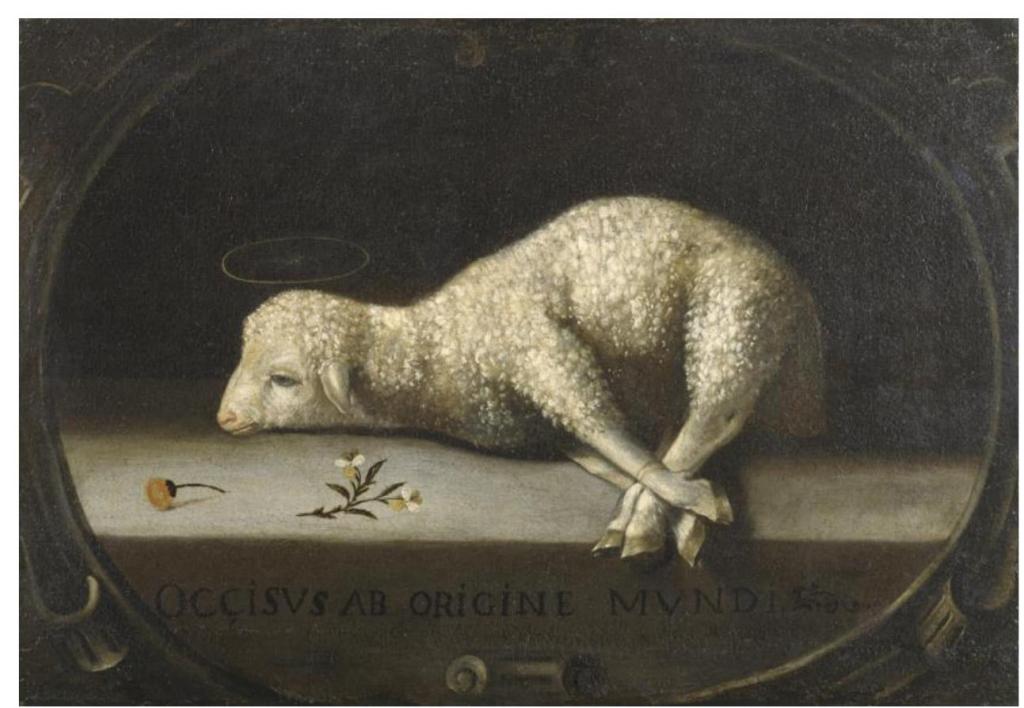
In the first moment, the book situates Josefa de Óbidos’ life and works in the historical and political context of Portugal during the 17th century. Her father was an artist too, and she was very active in the family workshop, that’s where she had her first painting lessons. There’s a pervasive myth about Josefa de Óbidos: that she was a devout recluse, and that her works were an extension of her deep religiosity. This myth turned her into a mystic nun with amateurish artistic ambitions. However, there is documentary evidence about her personal life as well as her entrepreneurial activities that proved she have been officially recognised as an “emancipated maiden”, this legal status in Portugal conferred upon unmarried women independence and freedom to conduct business, sign contracts and make transactions without the authorization of a male figure.
She was a strategic painter, and she had a clear sense of her identity as an artist, as we can see in the attention she paid to her signatures, not only about the frequency with which she signed, but also where and how she signed her works. Sometimes with name, surname and place. Her work can be considered as cosmopolitan since she interacted with the art created out of Portugal, in Europe and overseas, in the colonies, this can be seen in their careful depictions of rare objects and materials from various origins, especially in the representation of fabrics.
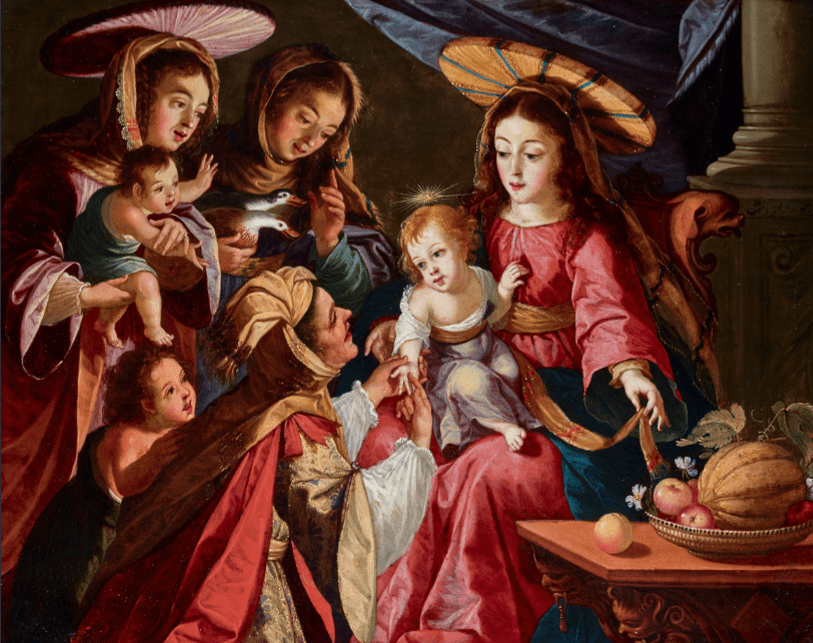
Even if Josefa de Óbidos was a cosmopolitan artist who kept and transformed widely varied artistic trends of her time, who attained professional independence and success, and until today she enjoys unmatched recognition in Portugal, in the last century, assumptions about his provincialism and naive religiosity became widespread.
Maria Sibylla Merian
I must confess that I am completely fascinated about the life and the work of this woman! She is simply inspiring! The book about Maria Sibylla Merian is written by Catherine Powell-Warren, who is an assistant professor in history of art at KU Leuven University. Merian was born in Frankfurt, and she was a painter, a printmaker, a teacher, a collector, a workshop mas and manager, a trader in artistic supplies and curiosities, and a naturalist. And undoubtedly, she is best known for her scientific illustrations. The book presents a nuanced and encompassing narrative throughout her art in her context.
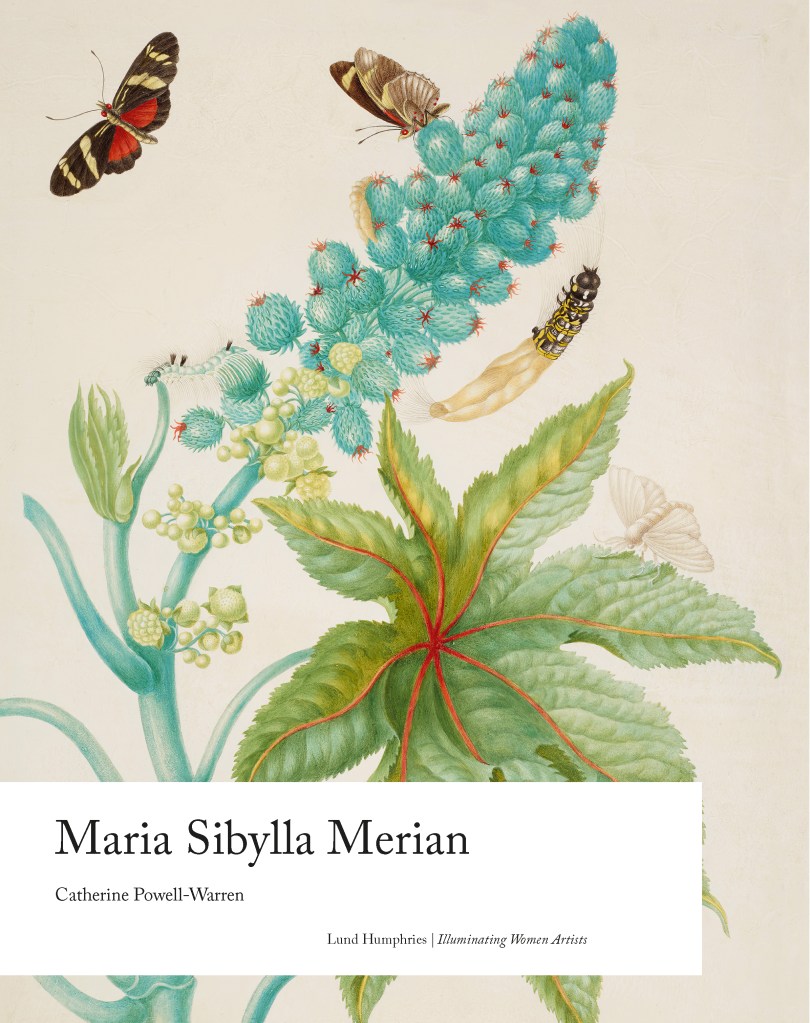
Even if the book focus on a relatively small body of her work, since the main objective is to demonstrate her outstanding talents, it establishes that her work must be observed with two aspects in mind, often considered to be opposites: aesthetic beauty and scientific accuracy.
Merian received what was considered as a typical education for a German girl of her economic and social background: reading/writing, basic maths, embroidery and household management. However, she grew up in a family of artists, so since a very early age she was in contact with the family workshop, and learned not only about art, but also about art-dealing business, even if she was not an official apprentice there. Merian was a cosmopolitan and curious woman, who wanted to see the world. During her life, Merian lived in different places such as Nuremberg that had been one of the most influential artistic centres in Germany, then Amsterdam and Suriname.
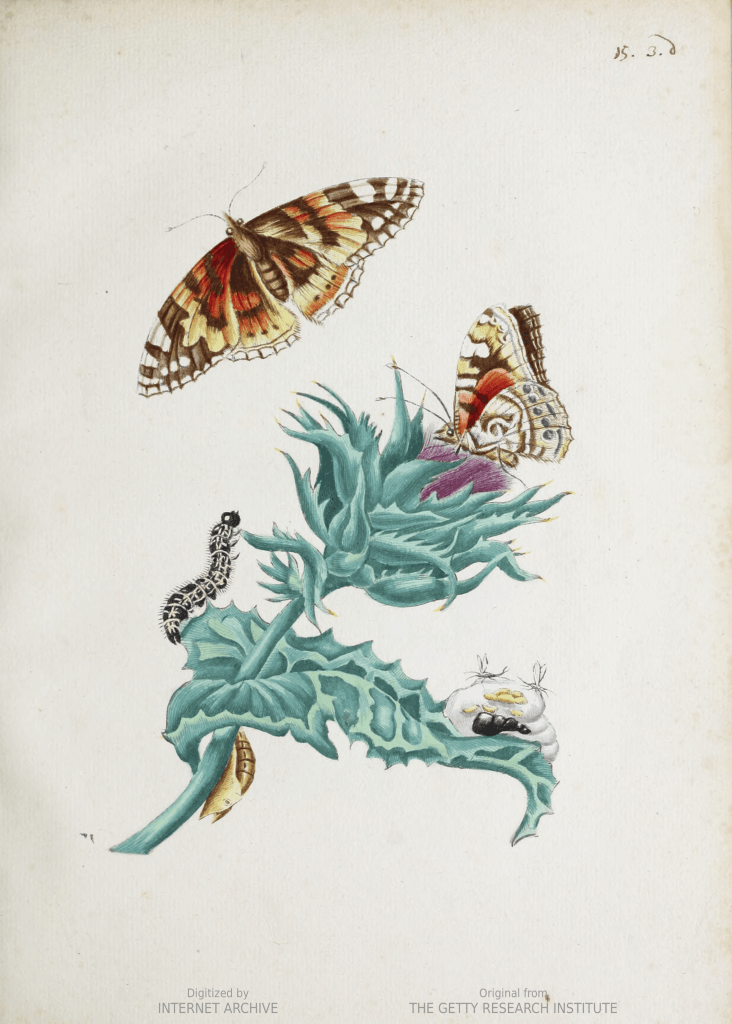
Merian published books, but more than that she wanted her books to be popular and she did wish to be recognised for her labour as well as for the quality of her observations and illustrations. However, she was aware that for a woman like herself, divorced and engaging in a what her contemporaries considered male pursuits: knowledge, travel, publications; there was no such a thing as dignified fame, only the notoriety.
She was not only an accomplished artist, but also a businesswoman, and one of her greatest strengths was the ability to adapt her work to the needs of the different audiences without sacrificing the technique or the quality. Another aspect that demonstrates her ability for business is that she intended to sell her Metamorphosis book based on a subscription model, selling it through subscriptions would enable her to raise funds immediately to finance the project, since it was a self-published book.
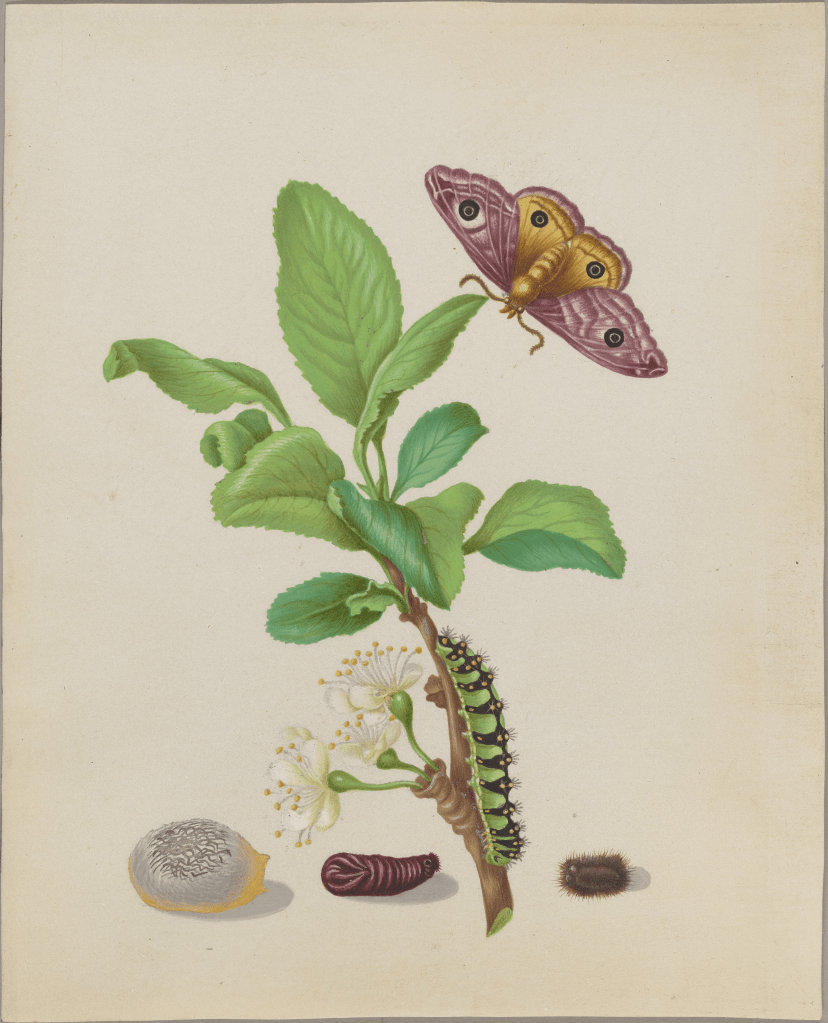
The fact I loved the most about Merian, is that she was the master of her workshop. It was a family enterprise; it functioned much like the most artistic workshops of the time. But in the case of Merian, it was different because it was created and run entirely by women: Merian and her daughters. They worked together, shared techniques and marketed their artistic production. Merian understood very early the artistic importance attached to the name (she always signed the same way) and so did her daughters, they all were conscient of Merian’s reputation and of the value attached to her name.
Highly Recommended!
As I told you before, in the other review, this collection is a treasure for all of those who want to know more about the life and career of women artists of the past. In the case of these two: Josefa de Óbidos and Maria Sibylla Merian, it is a bit hard to the general public to get reliable information on them.
Those two women had very different lives, but I can see in both of them something that doesn’t change, they were women artists who achieved their economic independence through their art. Josefa through important commissions, while Merian through her books, illustrations and her work as a teacher.
I confess, this time I do have a favourite. It was impossible for me not to develop an admiration and a special feeling for Merian while reading these pages. She was far ahead her time! An incredible woman who was an artist, a naturalist, the master of her own workshop, a businesswoman, she published books, she travelled to America, she is a true inspiration!
Have you read these books? If you had, please share your opinions, I will love to read them!
Curiosities:
- Josefa de Óbidos, like few other women artists who were not nuns, she never married or had children, so she could devote herself completely to her art.
- Josefa de Óbidos was often left out of discussions about European early modern art, even when the discussion centre around female artists.
- Maria Sibylla Merian achieved three-dimensional, naturalistic effects on a two-dimensional picture plane.
- Merian was very proud of the fact that she had funded the trip to Suriname herself, especially because it was very expansive.
- Merian was one of the first (if not the first) to capture a slice of the ecosystem.
References:
- Ripollés, Carmen.lluminating Women Artists: Renaissance and Baroque, Josefa de Óbidos. 2025
- Powell-Warren, Catherine. lluminating Women Artists: Renaissance and Baroque, Maria Sibylla Merian. 2025
- Images: Lund Humphries.
Acquire your books of Illuminating Women Artists series here!

Discover more from Women'n Art
Subscribe to get the latest posts sent to your email.

 Women'n Art
You must be logged in to post a comment.